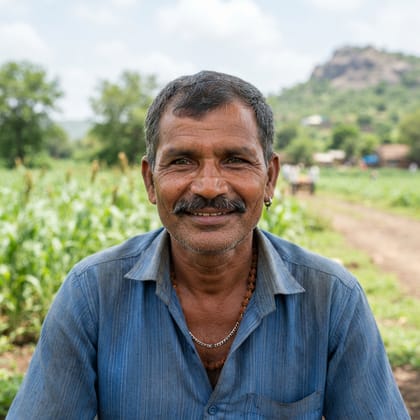
The Kapewar of India

The Kapewar of India, numbering approximately 80,500 people, are Unengaged and Unreached. They are a Telugu-origin masonry community of Maharashtra, also called Beldar, named for the kavacha tool they use to lay cement. The Kapewar migrated from Andhra Pradesh under Nizam rule. They now mainly work as agriculturists and laborers. They mostly adhere to Hinduism and Telugu is their primary language.

Photo by Google. (2026). Image generated by Gemini 3.1 Flash Lite: Kapewar

Fast Facts:

Affinity Group: South Asian Peoples
Country: India
People Cluster: Telugu
Primary Language(s): Telugu (tel)
Primary Religion(s): Hinduism
Population: 80,500
Strategic Progress Index (SPI): Unengaged and Unreached
Global Status of Evangelical Christianity (GSEC): Less than 2% Evangelical, No Recent CP Activity
People Group ID: PG041805
View on Joshua Project

Pray for the Kapewar of India

Join others around the world in praying for the lost to be saved, the gospel to advance, the global Church to grow, and for laborers to be sent out and sustained in the harvest.

Dig Deeper (Religion):

Primary Religion: Hinduism
Religious Affiliation: Hinduism

99%
%
Hinduism Adherents

Dig Deeper (Language):

Primary Language: Telugu
Language Family: Dravidian

100%
%
Telugu Speakers

Media Resources in Telugu:

Films:
Title Link
JESUS View Film
JESUS View Film
Magdalena View Film
The Savior View Film

4 films

Bible Resources in Telugu:

Or check out the Telugu bible at Bible.com

Linked from YouVersion

Explore Lostness and Next Steps

Unengaged and Unreached

Strategic Priority Index (SPI): Unengaged and Unreached (SPI: 0), which means there are less than 2% evangelical Christian populations among which there are no known efforts focused on establishing self-sustaining churches consistent with evangelical faith and practice.
Lostness Priority Index (LPI): Frontier Unreached People Group, (LPI: 0), < 0.1% Evangelical.
Global Status of Evangelical Christianity (GSEC): Less than 2% Evangelical, No Recent CP Activity (GSEC: 1), this people group is less than 2% evangelical, some evangelical resources are available, but there has been no active church planting among them within the past two years

Next steps for the Kapewar:
Begin signifcant prayer and fasting for this group
Send cross-cultural teams to discover and research this people group
Begin gospel seed sowing and church planting among this group

Pray specifically for the Kapewar of India

"For it is easier for a camel to go through the eye of a needle than for a rich person to enter the kingdom of God." Those who heard it said, "Then who can be saved?" But he said "What is impossible with man is possible with God."
readLuke 18:25-27

Pray that the lost who think they have everything they need will recognize their spiritual poverty apart from Jesus and turn to Him in faith.

So then it depends not on human will or exertion, but on God, who has mercy.
readRomans 9:16

Pray that the merciful God who is at work in people's hearts will advance His gospel among them.

And Jesus answered him, "Blessed are you, Simon Bar-Jonah! For flesh and blood has not revealed this to you, but my Father who is in heaven."
readMatthew 16:17

Pray that as people place their faith in Christ, they will abide in Him and have assurance that He is the Christ, the Son of the Living God.

Therefore, confess your sins to one another and pray for one another, that you may be healed. The prayer of a righteous person has great power as it is working.
readJames 5:16

Pray that believers whom God sends will confess their sins, pray for one another, and live in unity. Ask that they will model healthy Christian relationships for this people group.

Kapewar Across Countries (ROP3 - 112426) reported in the following countries:

Strategic Progress Index

All

1 people group

To download a comprehensive people group list in spreadsheet form, visit our Research Data page.

Peoplegroups.org relies on updates from the field and other organizations for much of our data, so if you have any updates, please contact us. We use various international naming standards. For a list of these standards and fields, visit our Data Standards section.

Scroll to Top