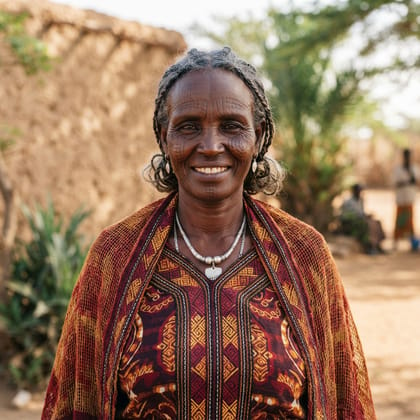
The Kunama of Sudan

The Kunama of Sudan, numbering approximately 33,000 people, are Unengaged and Unreached. They are a Nilo-Saharan-speaking people indigenous to western Eritrea and northern Ethiopia. Traditionally agriculturalists, they are known for their distinctive language, lowland culture, and matrilineal social organization. They mostly adhere to Sunni Islam and Kunama is their primary language.

Photo by Google. (2026). Image generated by Gemini 3.1 Flash Lite: Kunama

Fast Facts:

Affinity Group: Sub-Saharan African Peoples
Country: Sudan
People Cluster: Nilotic
Primary Language(s): Kunama (kun)
Primary Religion(s): Sunni Islam
Population: 33,000
Strategic Progress Index (SPI): Unengaged and Unreached
Global Status of Evangelical Christianity (GSEC): Less than 2% Evangelical, No Recent CP Activity
People Group ID: PG042829
View on Joshua Project

Pray for the Kunama of Sudan

Join others around the world in praying for the lost to be saved, the gospel to advance, the global Church to grow, and for laborers to be sent out and sustained in the harvest.

Dig Deeper (Religion):

Primary Religion: Sunni Islam
Religious Affiliation: Islam

79%
%
Sunni Islam Adherents

Dig Deeper (Language):

Primary Language: Kunama
Language Family: Kunama

80%
%
Kunama Speakers

Media Resources in Kunama:

Films:
TitleLink
JESUSView Film

1 film

Bible Resources in Kunama:

No Bible resources are listed for this language.

Or check out the Kunama bible at Bible.com

Linked from YouVersion

Explore Lostness and Next Steps

Unengaged and Unreached

Strategic Priority Index (SPI): Unengaged and Unreached (SPI: 0), which means there are less than 2% evangelical Christian populations among which there are no known efforts focused on establishing self-sustaining churches consistent with evangelical faith and practice.
Lostness Priority Index (LPI): Frontier Unreached People Group, (LPI: 0), < 0.1% Evangelical.
Global Status of Evangelical Christianity (GSEC): Less than 2% Evangelical, No Recent CP Activity (GSEC: 1), this people group is less than 2% evangelical, some evangelical resources are available, but there has been no active church planting among them within the past two years

Next steps for the Kunama:
Begin signifcant prayer and fasting for this group
Send cross-cultural teams to discover and research this people group
Begin gospel seed sowing and church planting among this group

Pray specifically for the Kunama of Sudan

The LORD has heard my plea; the LORD accepts my prayer.
readPsalm 6:9

Pray that lost people will hear the gospel and place their faith in Christ, knowing that He hears their plea and accepts their prayer.

Seek the LORD while he may be found; call upon him while he is near.
readIsaiah 55:6

Pray that the lost will seek the Lord while He may be found and call upon Him while He is near, for He is gracious and compassionate, slow to anger and abounding in steadfast love.

This mystery is profound, and I am saying that it refers to Christ and the church. However, let each one of you love his wife as himself, and let the wife see that she respects her husband.
readEphesians 5:32-33

Pray that as people place their faith in Christ, they will grasp the profound mystery of Christ's love for the Church, reflecting this love in their marriages.

And the ransomed of the LORD shall return and come to Zion with singing; everlasting joy shall be upon their heads; they shall obtain gladness and joy, and sorrow and sighing shall flee away.
readIsaiah 51:11

Pray that, as God sends people to cross cultures and share the good news of Jesus, many will turn to the Lord in repentance and faith and start a personal relationship with Him that will bring them everlasting joy.

Kunama Across Countries (ROP3 - 105406) reported in the following countries:

Strategic Progress Index
All

3 people groups

To download a comprehensive people group list in spreadsheet form, visit our Research Data page.

Peoplegroups.org relies on updates from the field and other organizations for much of our data, so if you have any updates, please contact us. We use various international naming standards. For a list of these standards and fields, visit our Data Standards section.

Scroll to Top