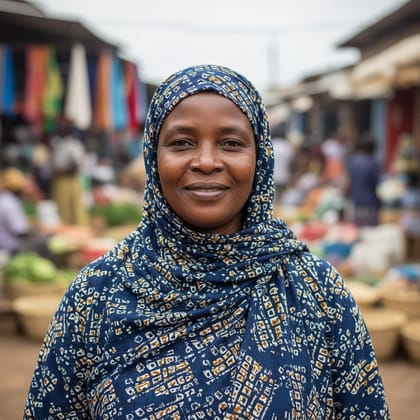
The Vai of Liberia

The Vai of Liberia, numbering approximately 225,000 people, are Engaged yet Unreached. They are a Mande people of Liberia's Cape Mount region descended from the Camara clan of Manding, who migrated southwest in the 1400s trading salt and kola, whose Vai syllabary, invented around 1833, inspired at least 27 other West African scripts. They mostly adhere to Folk Islam and Vai is their primary language.

Photo by Google. (2026). Image generated by Gemini 2.5 Flash: Vai

Fast Facts:

Affinity Group: Sub-Saharan African Peoples
Country: Liberia
People Cluster: Mande
Primary Language(s): Vai (vai)
Primary Religion(s): Folk Islam
Population: 225,000
Strategic Progress Index (SPI): Engaged yet Unreached
Global Status of Evangelical Christianity (GSEC): Less than 2% Evangelical, No Recent CP Activity
People Group ID: PG013530
View on Joshua Project

Pray for the Vai of Liberia

Join others around the world in praying for the lost to be saved, the gospel to advance, the global Church to grow, and for laborers to be sent out and sustained in the harvest.

Dig Deeper (Religion):

Primary Religion: Folk Islam
Religious Affiliation: Islam

98%
%
Folk Islam Adherents

Dig Deeper (Language):

Primary Language: Vai
Language Family: Mande

100%
%
Vai Speakers

Media Resources in Vai:

Films:
TitleLink
JESUSView Film

1 film

Bible Resources in Vai:

Bible Name (Translation)VideoAudioText
2002 Bible Society in Liberia✓✓

1 entry

Or check out the Vai bible at Bible.com

Linked from YouVersion

SPI: Unreached yet Engaged

The Vai are Engaged yet Unreached, which means there are less than 2% evangelical Christian populations but there are sustained efforts at establishing self-sustaining churches consistent with evangelical faith and practice.

Next steps for the Vai:
Continue prayer and fasting for this group
Continue gospel seed sowing and church planting among this group
Begin training up local leaders to lead and develop strategies to reach their own people

Pray specifically for the Vai of Liberia

For by him all things were created, in heaven and on earth, visible and invisible, whether thrones or dominions or?rulers?or authorities—all things were created through him and for him.
readColossians 1:16

Pray for those who are lost among them, that they will come to know the One who created all things and holds all things together.

And he made from one man every nation of mankind to live on all the face of the earth, having determined allotted periods and the boundaries of their dwelling place, that they should seek God, and perhaps feel their way toward him and find him. Yet he is actually not far from each one of us.
readActs 17:26-27

Pray that the lost will seek God and find Him, for He is not far from each one of us. Pray that they will have opportunities to access the gospel, learn God's purpose for their lives, and believe in Him.

There is neither Jew nor Greek, there is neither slave nor free, there is no male and female, for you are all one in Christ Jesus.
readGalatians 3:28

Pray that as people place their faith in Christ, they will be united in Christ across all differences of ethnicity, social status, and gender.

After this I looked, and behold, a great multitude that no one could number, from every nation, from all tribes and peoples and languages, standing before the throne and before the Lamb, clothed in white robes, with palm branches in their hands, and crying out with a loud voice, “Salvation belongs to our God who sits on the throne, and to the Lamb!”
readRevelation 7:9-10

Pray that the promise in Revelation 7:9-10 will encourage believers from among them or from nearby people groups to share the gospel with people who have never learned it.

Vai Across Countries (ROP3 - 110483) reported in the following countries:

Strategic Progress Index
All

2 people groups

To download a comprehensive people group list in spreadsheet form, visit our Research Data page.

Peoplegroups.org relies on updates from the field and other organizations for much of our data, so if you have any updates, please contact us. We use various international naming standards. For a list of these standards and fields, visit our Data Standards section.

Scroll to Top