The Santiago de Estero Quichua of Argentina
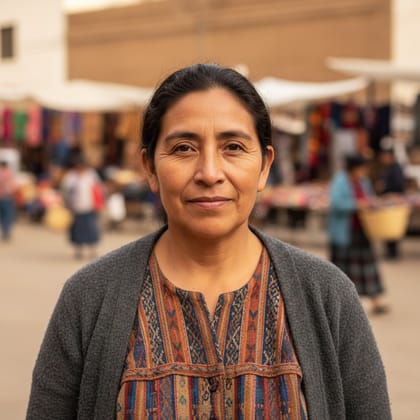
The Santiago de Estero Quichua of Argentina, numbering approximately 60,000 people, are Engaged yet Unreached. They are descendants of Quechua-speaking yanaconas brought from Peru and Chile by Spanish colonists who founded Santiago del Estero, Argentina in 1553, in an area earlier home to the Tonocote and Sanavirona peoples. They mostly adhere to Ethnoreligion and Santiago del Estero Quichua is their primary language.

Photo by Google. (2026). Image generated by Gemini 2.5 Flash: Quichua, Santiago de Estero

Fast Facts:

Affinity Group: Latin American and Caribbean Peoples
Country: Argentina
People Cluster: Quechua
Primary Language(s): Santiago del Estero Quichua (qus)
Primary Religion(s): Ethnoreligion
Population: 60,000
Strategic Progress Index (SPI): Engaged yet Unreached
Global Status of Evangelical Christianity (GSEC): Less than 2% Evangelical, No Recent CP Activity
People Group ID: PG017364
View on Joshua Project

Pray for the Santiago de Estero Quichua of Argentina

Join others around the world in praying for the lost to be saved, the gospel to advance, the global Church to grow, and for laborers to be sent out and sustained in the harvest.

Dig Deeper (Religion):

Primary Religion: Ethnoreligion
Religious Affiliation: Ethnoreligion

85%
%
Ethnoreligion Adherents

Dig Deeper (Language):

Primary Language: Santiago del Estero Quichua
Language Family: Quechuan

50%
%
Quichua, Santiago del Estero Speakers

Media Resources in Santiago del Estero Quichua:

Films:

No film resources are listed for this language.

Bible Resources in Santiago del Estero Quichua:

No Bible resources are listed for this language.

Or check out the Santiago del Estero Quichua bible at Bible.com

Linked from YouVersion

SPI: Unreached yet Engaged

The Santiago de Estero Quichua are Engaged yet Unreached, which means there are less than 2% evangelical Christian populations but there are sustained efforts at establishing self-sustaining churches consistent with evangelical faith and practice.

Next steps for the Santiago de Estero Quichua:
Continue prayer and fasting for this group
Continue gospel seed sowing and church planting among this group
Begin training up local leaders to lead and develop strategies to reach their own people

Pray specifically for the Santiago de Estero Quichua of Argentina

How then will they call on him in whom they have not believed? And how are they to believe in him of whom they have never heard? And how are they to hear without someone preaching?
readRomans 10:14

Pray that those who haven't heard will hear the Word of Christ and believe in Him, calling upon the name of the Lord to be saved.

O LORD, how manifold are your works! In wisdom have you made them all; the earth is full of your creatures.
readPsalm 104:24

Pray that they will see the wisdom and power of God in His creation and praise Him for His mighty works.

For I am sure that neither death nor life, nor angels nor rulers, nor things present nor things to come, nor powers, nor height nor depth, nor anything else in all creation, will be able to separate us from the love of God in Christ Jesus our Lord.
readRomans 8:38-39

Pray that as people place their faith in Christ, they will have confidence in their salvation, knowing that nothing can separate them from the One who conquered death and loves them as His children.

Go therefore and make disciples of all nations, baptizing them in the name of the Father and of the Son and of the Holy Spirit, teaching them to observe all that I have commanded you. And behold, I am with you always, to the end of the age.”
readMatthew 28:19-20

Ask God to bring people among this group to faith in Jesus who will be obedient to make disciples of all nations, baptizing them and teaching them to obey all that Christ has commanded.

Quichua, Santiago del Estero Across Countries (ROP3 - 108678) reported in the following countries:

Strategic Progress Index
All

1 people group

To download a comprehensive people group list in spreadsheet form, visit our Research Data page.

Peoplegroups.org relies on updates from the field and other organizations for much of our data, so if you have any updates, please contact us. We use various international naming standards. For a list of these standards and fields, visit our Data Standards section.

Scroll to Top