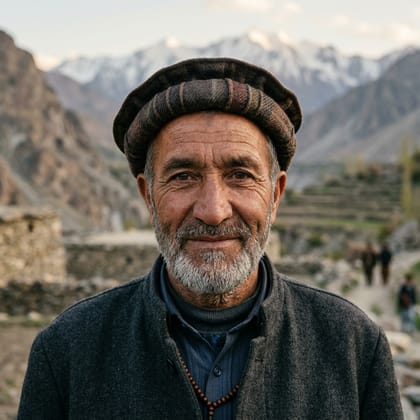
The Munji-Yidgha of Afghanistan

The Munji-Yidgha of Afghanistan, numbering approximately 8,900 people, are Unengaged and Unreached. They are described as an eastern Iranian Pamiri people of the Munjan Valley in northeastern Afghanistan. They speak Munji, a Pamiri language, and are predominantly Shia Muslims with a distinct mountain cultural identity They are an Indigenous people, with Munji (Afghanistan) as their ethnic/kinship group and are in the Kashmiri people cluster of the South Asian Peoples. They mostly adhere to Shia Islam and Munji is their primary language.

Photo by Google. (2026). Image generated by Gemini 3.1 Flash: Munji-Yidgha

Fast Facts:

Affinity Group: South Asian Peoples
Country: Afghanistan
People Cluster: Kashmiri
Primary Language(s): Munji (mnj)
Primary Religion(s): Shia Islam
Population: 8,900
Strategic Progress Index (SPI): Unengaged and Unreached
Global Status of Evangelical Christianity (GSEC): Less than 2% Evangelical, No Recent CP Activity
People Group ID: PG023969
View on Joshua Project

Pray for the Munji-Yidgha of Afghanistan

Join others around the world in praying for the lost to be saved, the gospel to advance, the global Church to grow, and for laborers to be sent out and sustained in the harvest.

Dig Deeper (Religion):

Primary Religion: Shia Islam
Religious Affiliation: Islam

100%
%
Shia Islam Adherents

Dig Deeper (Language):

Primary Language: Munji
Language Family: Indo-European

100%
%
Munji Speakers

Media Resources in Munji:

Films:

No film resources are listed for this language.

Bible Resources in Munji:

No Bible resources are listed for this language.

Or check out the Munji bible at Bible.com

Linked from YouVersion

Explore Lostness and Next Steps

Unengaged and Unreached

Strategic Priority Index (SPI): Unengaged and Unreached (SPI: 0), which means there are less than 2% evangelical Christian populations among which there are no known efforts focused on establishing self-sustaining churches consistent with evangelical faith and practice.
Lostness Priority Index (LPI): Frontier Unreached People Group, (LPI: 0), < 0.1% Evangelical.
Global Status of Evangelical Christianity (GSEC): Less than 2% Evangelical, No Recent CP Activity (GSEC: 1), this people group is less than 2% evangelical, some evangelical resources are available, but there has been no active church planting among them within the past two years

Next steps for the Munji-Yidgha:
Begin signifcant prayer and fasting for this group
Send cross-cultural teams to discover and research this people group
Begin gospel seed sowing and church planting among this group

Pray specifically for the Munji-Yidgha of Afghanistan

For who is God, but the LORD? And who is a rock, except our God?
readPsalm 18:31

As people look to their own efforts for hope, pray they will have the opportunity to learn and believe in the Lord, who is the only Rock worthy of their faith.

As for what was sown on good soil, this is the one who hears the word and understands it. He indeed bears fruit and yields, in one case a hundredfold, in another sixty, and in another thirty.
readMatthew 13:23

Pray that their hearts will have good soil that receives the Word, understands it, and bears fruit for God's kingdom.

For you were straying like sheep, but have now returned to the Shepherd and Overseer of your souls.
read1 Peter 2:25

Pray that as people place their faith in Christ, they will proclaim the good news and the lost will recognize their need for the Shepherd and turn to Jesus Christ in faith.

And through him to reconcile to himself all things, whether on earth or in heaven, making peace by the blood of his cross.
readColossians 1:20

As believers cross cultures to tell others about Jesus, praise God for allowing them to be a part of His reconciling all things to Himself, asking Him to help them remember their role in His beautiful plan of salvation for others.

Munji Across Countries (ROP3 - 106912) reported in the following countries:

Strategic Progress Index
All

1 people group

To download a comprehensive people group list in spreadsheet form, visit our Research Data page.

Peoplegroups.org relies on updates from the field and other organizations for much of our data, so if you have any updates, please contact us. We use various international naming standards. For a list of these standards and fields, visit our Data Standards section.

Scroll to Top