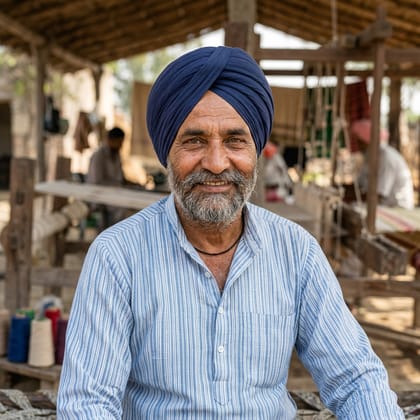
The Julaha (Punjabi) of India

The Julaha (Punjabi) of India, numbering approximately 1,465,000 people, are Engaged yet Unreached. They are a historic weaving community of the Indian subcontinent, best known for their long association with hand‑loom textile production, especially cotton cloth. They mostly adhere to Hinduism and Panjabi is their primary language.

Photo by Google. (2026). Image generated by Gemini 3.1 Flash: Julaha (Punjabi)

Fast Facts:

Affinity Group: South Asian Peoples
Country: India
People Cluster: Punjabi
Primary Language(s): Panjabi (pan)
Primary Religion(s): Hinduism
Population: 1,465,000
Strategic Progress Index (SPI): Engaged yet Unreached
Global Status of Evangelical Christianity (GSEC): Less than 2% Evangelical, No Recent CP Activity
People Group ID: PG048443

Pray for the Julaha (Punjabi) of India

Join others around the world in praying for the lost to be saved, the gospel to advance, the global Church to grow, and for laborers to be sent out and sustained in the harvest.

Dig Deeper (Religion):

Primary Religion: Hinduism
Religious Affiliation: Hinduism

100%
%
Hinduism Adherents

Dig Deeper (Language):

Primary Language: Panjabi
Language Family: Indo-European

100%
%
Punjabi, Eastern Speakers

Media Resources in Panjabi:

Films:
TitleLink
JESUSView Film
MagdalenaView Film
The SaviorView Film

3 films

Bible Resources in Panjabi:

Bible Name (Translation)VideoAudioText
2000 Bible League International✓
Indian Revised Version✓✓

2 entries

Or check out the Panjabi bible at Bible.com

Linked from YouVersion

SPI: Unreached yet Engaged

The Julaha (Punjabi) are Engaged yet Unreached, which means there are less than 2% evangelical Christian populations but there are sustained efforts at establishing self-sustaining churches consistent with evangelical faith and practice.

Next steps for the Julaha (Punjabi):
Continue prayer and fasting for this group
Continue gospel seed sowing and church planting among this group
Begin training up local leaders to lead and develop strategies to reach their own people

Pray specifically for the Julaha (Punjabi) of India

For my own sake, for my own sake, I do it, for how should my name be profaned? My glory I will not give to another.
readIsaiah 48:11

Pray that those who have been living for their own glory will turn to the One who is worthy of all praise and find their true identity in Him.

For I will proclaim the name of the LORD; ascribe greatness to our God!
readDeuteronomy 32:3

Pray that believers will proclaim the Lord’s name and declare the greatness of our God so that others might believe in Him.

Jesus said, ‘Truly, I say to you, there is no one who has left house or brothers or sisters or mother or father or children or lands, for my sake and for the gospel, who will not receive a hundredfold now in this time, houses and brothers and sisters and mothers and children and lands, with persecutions, and in the age to come eternal life.
readMark 10:29-30

Pray that as people place their faith in Christ, they will know that when they make sacrifices to follow Jesus, He is there with them and will bless them abundantly in this life and in the life to come.

Finally, brothers, pray for us, that the word of the Lord may speed ahead and be honored, as happened among you, and that we may be delivered from wicked and evil men. For not all have faith. But the Lord is faithful. He will establish you and guard you against the evil one.
read2 Thessalonians 3:1-3

Pray that the Word of God will spread throughout this people group and be honored. Ask God to establish His people and guard them from the evil one, testifying to this whole people group of His great faithfulness.

Julaha (Panjabi) Across Countries (ROP3 - 118757) reported in the following countries:

Strategic Progress Index
All

1 people group

To download a comprehensive people group list in spreadsheet form, visit our Research Data page.

Peoplegroups.org relies on updates from the field and other organizations for much of our data, so if you have any updates, please contact us. We use various international naming standards. For a list of these standards and fields, visit our Data Standards section.

Scroll to Top