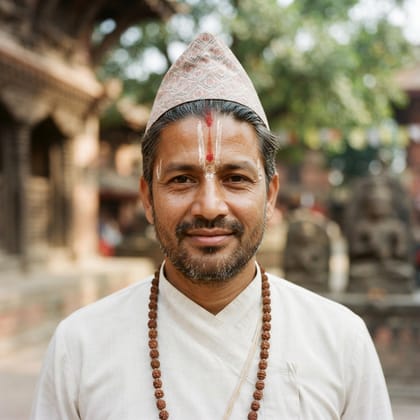
The Brahmin (Nepali) of India

The Brahmin (Nepali) of India, numbering approximately 94,500 people, are Engaged yet Unreached. They are a socio‑religious class in South Asia traditionally associated with religious learning, ritual leadership, and scholarship within Hindu society. They are one of the oldest and most influential social groups in the historical Indian caste system. They mostly adhere to Hinduism and Nepali (individual language) is their primary language.

Photo by Google. (2026). Image generated by Gemini 3.1 Flash Lite: Brahman (Nepali)

Fast Facts:

Affinity Group: South Asian Peoples
Country: India
People Cluster: Brahmin
Primary Language(s): Nepali (individual language) (npi)
Primary Religion(s): Hinduism
Population: 94,500
Strategic Progress Index (SPI): Engaged yet Unreached
Global Status of Evangelical Christianity (GSEC): Less than 2% Evangelical, Concentrated CP Activity
People Group ID: PG048236

Pray for the Brahmin (Nepali) of India

Join others around the world in praying for the lost to be saved, the gospel to advance, the global Church to grow, and for laborers to be sent out and sustained in the harvest.

Dig Deeper (Religion):

Primary Religion: Hinduism
Religious Affiliation: Hinduism

100%
%
Hinduism Adherents

Dig Deeper (Language):

Primary Language: Nepali (individual language)
Language Family: Indo-European

100%
%
Nepali Speakers

Media Resources in Nepali (individual language):

Films:
TitleLink
JESUSView Film
JESUSView Film
MagdalenaView Film
The SaviorView Film

4 films

Bible Resources in Nepali (individual language):

Bible Name (Translation)VideoAudioText
New Revised Version✓✓
New Revised Version - LUMO Christmas Film✓

2 entries

Or check out the Nepali (individual language) bible at Bible.com

Linked from YouVersion

SPI: Unreached yet Engaged

The Brahmin (Nepali) are Engaged yet Unreached, which means there are less than 2% evangelical Christian populations but there are sustained efforts at establishing self-sustaining churches consistent with evangelical faith and practice.

Next steps for the Brahmin (Nepali):
Continue prayer and fasting for this group
Continue gospel seed sowing and church planting among this group
Begin training up local leaders to lead and develop strategies to reach their own people

Pray specifically for the Brahmin (Nepali) of India

Jesus said to her, “I am the resurrection and the life. Whoever believes in me, though he die, yet shall he live.
readJohn 11:25

Pray for the many who have never heard about or understood the importance of what Jesus did for them, asking God to make a way for them to hear that the perfect Son of Man suffered, died, and rose again so that they might be saved.

So his fame spread throughout all Syria, and they brought him all the sick, those afflicted with various diseases and pains, those oppressed by demons, those having seizures, and paralytics, and he healed them
readMatthew 4:24

Pray that the truth about the Lord will spread throughout the land so that many will have an opportunity to receive the good news and put their faith in Him.

Remember your mercy, O LORD, and your steadfast love, for they have been from of old.
readPsalm 25:6

Pray that as people place their faith in Christ, they will remember the merciful nature and steadfast love of God as they walk with Him daily.

And through him to reconcile to himself all things, whether on earth or in heaven, making peace by the blood of his cross.
readColossians 1:20

As believers cross cultures to tell others about Jesus, praise God for allowing them to be a part of His reconciling all things to Himself, asking Him to help them remember their role in His beautiful plan of salvation for others.

Brahmin (Nepali) Across Countries (ROP3 - 116411) reported in the following countries:

Strategic Progress Index
All

3 people groups

To download a comprehensive people group list in spreadsheet form, visit our Research Data page.

Peoplegroups.org relies on updates from the field and other organizations for much of our data, so if you have any updates, please contact us. We use various international naming standards. For a list of these standards and fields, visit our Data Standards section.

Scroll to Top