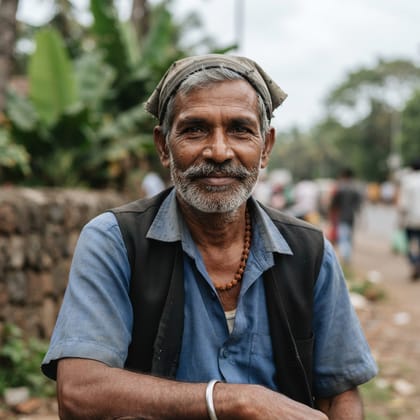
The Bhangi (Konkani) of India

The Bhangi (Konkani) of India, numbering approximately 14,000 people, are Engaged yet Unreached. They are described as a Dalit (Scheduled Caste) community of the Indian subcontinent whose members have been historically associated with sanitation, sweeping, and waste‑removal work—occupations that were stigmatized as “polluting” under the traditional caste system They are an Indigenous people, with Bhangi as their ethnic/kinship group and are in the Valmiki people cluster of the South Asian Peoples. They mostly adhere to Hinduism and Konkani (individual language) is their primary language.

Photo by Google. (2026). Image generated by Gemini 3.1 Flash Lite: Bhangi (Konkani)

Fast Facts:

Affinity Group: South Asian Peoples
Country: India
People Cluster: Valmiki
Primary Language(s): Konkani (individual language) (knn)
Primary Religion(s): Hinduism
Population: 14,000
Strategic Progress Index (SPI): Engaged yet Unreached
Global Status of Evangelical Christianity (GSEC): Less than 2% Evangelical, No Recent CP Activity
People Group ID: PG048222

Pray for the Bhangi (Konkani) of India

Join others around the world in praying for the lost to be saved, the gospel to advance, the global Church to grow, and for laborers to be sent out and sustained in the harvest.

Dig Deeper (Religion):

Primary Religion: Hinduism
Religious Affiliation: Hinduism

95%
%
Hinduism Adherents

Dig Deeper (Language):

Primary Language: Konkani (individual language)
Language Family: Indo-European

100%
%
Konkani Speakers

Media Resources in Konkani (individual language):

Films:
TitleLink
JESUSView Film

1 film

Bible Resources in Konkani (individual language):

No Bible resources are listed for this language.

Or check out the Konkani (individual language) bible at Bible.com

Linked from YouVersion

SPI: Unreached yet Engaged

The Bhangi (Konkani) are Engaged yet Unreached, which means there are less than 2% evangelical Christian populations but there are sustained efforts at establishing self-sustaining churches consistent with evangelical faith and practice.

Next steps for the Bhangi (Konkani):
Continue prayer and fasting for this group
Continue gospel seed sowing and church planting among this group
Begin training up local leaders to lead and develop strategies to reach their own people

Pray specifically for the Bhangi (Konkani) of India

I acknowledged my sin to you, and I did not cover my iniquity; I said, 'I will confess my transgressions to the Lord,' and you forgave the iniquity of my sin.
readPsalm 32:5

Pray those who are lost will realize their sin, confess their iniquity, and grow in their understanding of salvation through faith in Christ alone.

And as Moses lifted up the serpent in the wilderness, so must the Son of Man be lifted up, that whoever believes in him may have eternal life.
readJohn 3:14-15

Pray that the lost will look to Jesus lifted up on the cross and believe in Him, gaining eternal life with God.

And day by day, attending the temple together and breaking bread in their homes, they received their food with glad and generous hearts, praising God and having favor with all the people. And the Lord added to their number day by day those who were being saved.
readActs 2:46-47

Pray that as people place their faith in Christ, they will be devoted to the teaching of God's Word, to fellowship with one another, and to prayer.

For the wages of sin is death, but the free gift of God is eternal life in Christ Jesus our Lord.
readRomans 6:23

Pray that God will bring people to faith who are excited about the eternal life they have in Christ and will want to cross cultures to share this hope with others.

Bhangi (Konkani) Across Countries (ROP3 - 118870) reported in the following countries:

Strategic Progress Index
All

1 people group

To download a comprehensive people group list in spreadsheet form, visit our Research Data page.

Peoplegroups.org relies on updates from the field and other organizations for much of our data, so if you have any updates, please contact us. We use various international naming standards. For a list of these standards and fields, visit our Data Standards section.

Scroll to Top