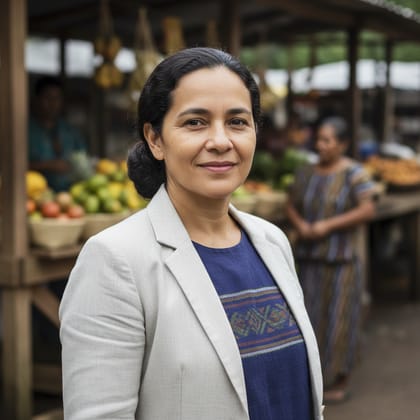
The Apama of Brazil

The Apama of Brazil, numbering approximately 200 people, are Unengaged and Unreached. They are an Indigenous people of the Pará–Amapá border region whose distinct identity is reported in ethnographic and people-group sources but whose ancestry, language history, and ethnolinguistic affiliations remain insufficiently documented. They mostly adhere to Ethnoreligion and Portuguese is their primary language.

Photo by Google. (2026). Image generated by Gemini 2.5 Flash: Apama

Fast Facts:

Affinity Group: Latin American and Caribbean Peoples
Country: Brazil
People Cluster: South American Indigenous
Primary Language(s): Portuguese (por)
Primary Religion(s): Ethnoreligion
Population: 200
Strategic Progress Index (SPI): Unengaged and Unreached
Global Status of Evangelical Christianity (GSEC): Less than 2% Evangelical, No Recent CP Activity
People Group ID: PG016875
View on Joshua Project

Pray for the Apama of Brazil

Join others around the world in praying for the lost to be saved, the gospel to advance, the global Church to grow, and for laborers to be sent out and sustained in the harvest.

Dig Deeper (Religion):

Primary Religion: Ethnoreligion
Religious Affiliation: Ethnoreligion

100%
%
Ethnoreligion Adherents

Dig Deeper (Language):

Primary Language: Portuguese
Language Family: Indo-European

100%
%
Portuguese Speakers

Media Resources in Portuguese:

Films:
TitleLink
JESUSView Film
JESUSView Film
MagdalenaView Film
MagdalenaView Film
The SaviorView Film

5 films

Explore Lostness and Next Steps

Unengaged and Unreached

Strategic Priority Index (SPI): Unengaged and Unreached (SPI: 0), which means there are less than 2% evangelical Christian populations among which there are no known efforts focused on establishing self-sustaining churches consistent with evangelical faith and practice.
Lostness Priority Index (LPI): Frontier Unreached People Group, (LPI: 0), < 0.1% Evangelical.
Global Status of Evangelical Christianity (GSEC): Less than 2% Evangelical, No Recent CP Activity (GSEC: 1), this people group is less than 2% evangelical, some evangelical resources are available, but there has been no active church planting among them within the past two years

Next steps for the Apama:
Begin signifcant prayer and fasting for this group
Send cross-cultural teams to discover and research this people group
Begin gospel seed sowing and church planting among this group

Pray specifically for the Apama of Brazil

For one will scarcely die for a righteous person—though perhaps for a good person one would dare even to die—but God shows his love for us in that while we were still sinners, Christ died for us.
readRomans 5:7-8

Pray for the many who don't yet understand the hope of the gospel, and pray that God will reveal to them that while they were in darkness, Christ died for them.

After this he went out and saw a tax collector named Levi, sitting at the tax booth. And he said to him, “Follow me.” And leaving everything, he rose and followed him.
readLuke 5:27-28

Prat that God will prepare many hearts to meet Him when He says, “Follow Me!” and that they will respond in faith, leaving everything behind to follow Him.

Behold, how good and pleasant it is when brothers dwell in unity!
readPsalm 133:1

Pray that as people place their faith in Christ, they will be unified and love one another as God loves them.

May God be gracious to us and bless us and make his face to shine upon us, that your way may be known on earth, your saving power among all nations.
readPsalm 67:1-2

Pray that as God blesses believers from among this people group or from nearby cultures, He will raise them up to share His saving power among the nations.

Iapama Across Countries (ROP3 - 103932) reported in the following countries:

Strategic Progress Index
All

1 people group

To download a comprehensive people group list in spreadsheet form, visit our Research Data page.

Peoplegroups.org relies on updates from the field and other organizations for much of our data, so if you have any updates, please contact us. We use various international naming standards. For a list of these standards and fields, visit our Data Standards section.

Scroll to Top