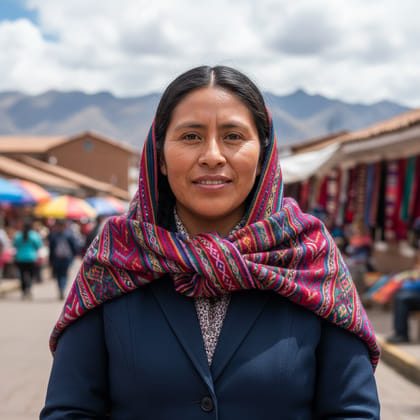
The Southern Huancayo Quechua of Peru

The Southern Huancayo Quechua of Peru, numbering approximately 250,000 people, are No Longer Unreached. They are described as an Indigenous Wanka Quechua people of the Mantaro Valley in central Peru whose ancestry is linked to the historic Huanca nation and whose identity is expressed through the Huaylla Wanka Quechua language and Andean agricultural traditions They are an Indigenous people, with Quechua / Quichua as their ethnic/kinship group and are in the Quechua people cluster of the Latin American and Caribbean Peoples. Their primary religion is Folk Catholicism. They primarily speak Huaylla Wanca Quechua.

Photo by Google. (2026). Image generated by Gemini 2.5 Flash: Quechua, Southern Huancayo

Fast Facts:

Affinity Group: Latin American and Caribbean Peoples
Country: Peru
People Cluster: Quechua
Primary Language(s): Huaylla Wanca Quechua (qvw)
Primary Religion(s): Folk Catholicism
Population: 250,000
Strategic Progress Index (SPI): No Longer Unreached
Global Status of Evangelical Christianity (GSEC): 2% or Greater but Less than 5% Evangelical
People Group ID: PG017594
View on Joshua Project

Pray for the Southern Huancayo Quechua of Peru

Join others around the world in praying for the lost to be saved, the gospel to advance, the global Church to grow, and for laborers to be sent out and sustained in the harvest.

Dig Deeper (Religion):

Primary Religion: Folk Catholicism
Religious Affiliation: Christianity

91%
%
Folk Catholicism Adherents

Dig Deeper (Language):

Primary Language: Huaylla Wanca Quechua
Language Family: Quechuan

100%
%
Quechua, Huaylla Wanca Speakers

Media Resources in Huaylla Wanca Quechua:

Films:
TitleLink
JESUSView Film

1 film

Bible Resources in Huaylla Wanca Quechua:

Bible Name (Translation)VideoAudioText
2006 Bible League International✓✓✓

1 entry

Or check out the Huaylla Wanca Quechua bible at Bible.com

Linked from YouVersion

SPI: No longer Unreached

The Southern Huancayo Quechua are No Longer Unreached, which means there are more than 2% evangelical Christian populations and there are churches consistent with evangelical faith and practice. There is still more to be done among them.

Next steps for the Southern Huancayo Quechua:
Empower local believers to begin praying for their own people
Continue gospel seed sowing and church planting
Encourage local leaders to being leading church planting strategy and looking for Unreached and Unengaged groups nearby

Pray specifically for the Southern Huancayo Quechua of Peru

For the wages of sin is death, but the free gift of God is eternal life in Christ Jesus our Lord.
readRomans 6:23

Pray that those who do know about God's free gift will hear and believe that the wages of sin is death, but the free gift of God is eternal life in Christ Jesus our Lord and that they will joyfully accept this gift.

This is the message we have heard from him and proclaim to you, that God is light, and in him is no darkness at all.
read1 John 1:5

As mobile phones, radio, and satellite television, and other technologies become more available worldwide, pray for people who are developing digital gospel resources so that others can easily access the gospel.

What causes quarrels and what causes fights among you? Is it not this, that your passions are at war within you?
readJames 4:1

Pray that as people place their faith in Christ, they will turn from worldly passions and live in unity with one another.

To the Jews I became as a Jew, in order to win Jews. To those under the law I became as one under the law (though not being myself under the law) that I might win those under the law.
read1 Corinthians 9:20

Pray that believers from similar cultures will be compelled by Christ's love to reach people who don't know the gospel, and that those people will receive the good news with joy.

Quechua, Huaylla Wanca Across Countries (ROP3 - 109482) reported in the following countries:

Strategic Progress Index
All

1 people group

To download a comprehensive people group list in spreadsheet form, visit our Research Data page.

Peoplegroups.org relies on updates from the field and other organizations for much of our data, so if you have any updates, please contact us. We use various international naming standards. For a list of these standards and fields, visit our Data Standards section.

Scroll to Top